From Models to Decisions: Key Insights from ASCPT 2026 on the Future of Model Informed Drug Development
13 march 2026
The ASCPT Annual Meeting remains one of the most influential forums for the global clinical pharmacology community. The 2026 edition in Denver brought together scientists, modelers, clinicians, and industry leaders to explore how quantitative science continues to transform drug development.
Under this year’s theme, “Advancing Pharmacoequity”, the conference highlighted the growing role of data, modeling, and integrated evidence generation in enabling more informed, equitable, and efficient healthcare decisions.
| For the team from IntiQuan (a ProductLife Group company) attending the meeting, several discussions pointed to a clear trend: quantitative approaches such as pharmacometrics and Quantitative Systems Pharmacology (QSP) are increasingly becoming central to development strategies rather than niche analytical tools. | 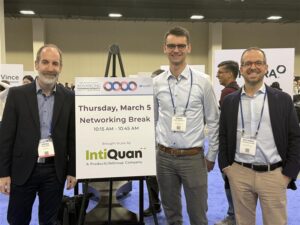 |
Across sessions, posters, and informal discussions, a few key themes consistently emerged:
Hybrid Approaches: Pharmacometric Structure Meets Data-Driven Innovation
One of the most recurring discussions throughout the conference focused on the growing intersection between pharmacometrics (PMx) and data-driven approaches such as AI and machine learning.
Importantly, the conversation was not framed as a replacement of traditional modeling methods. Instead, the industry is exploring how data-driven tools can enhance and streamline parts of the workflow, particularly in areas such as data exploration, simulation acceleration, and pattern detection.
At the same time, participants emphasized that interpretability, traceability, and mechanistic understanding remain essential. Pharmacometric models continue to provide the structured scientific framework needed to support regulatory dialogue and cross-functional decision-making.
In this emerging hybrid paradigm, AI and advanced analytics act as complementary tools that can improve efficiency while maintaining the scientific rigor and transparency that quantitative drug development requires.
Quantitative Systems Pharmacology Is Entering a New Phase
Another topic that stood out during ASCPT 2026 was the growing prominence of Quantitative Systems Pharmacology (QSP).
Over the past decade, QSP has evolved from a primarily academic discipline into a practical tool for addressing complex biological questions. This shift was particularly visible during discussions surrounding the Sheiner–Beal Award Lecture by Cynthia J. Musante, where the integration of QSP within the broader Model-Informed Drug Development (MIDD) ecosystem was highlighted.
What is changing is not only the sophistication of the models but also their practical application in development programs. Increasingly, QSP models are used to:
· explore disease mechanisms
· evaluate therapeutic hypotheses
· inform dose selection
· support clinical trial design
By integrating mechanistic insight with quantitative modeling, QSP provides a powerful bridge between biology, pharmacology, and clinical development strategy.
The increasing number of applied case studies presented during the conference -particularly in the Poster Pavilion – reflects the maturity of the field and its growing relevance for real-world development decisions.
Credibility and Governance Are Now Central to Innovation
While new computational approaches are generating significant excitement, one of the strongest signals across the meeting was the emphasis on standards for transparency and risk assessment.
As quantitative approaches become more influential in regulatory and strategic decisions, ensuring governance, transparency, and reproducibility is essential. This is particularly true when integrating AI-enabled methods into modeling workflows.
The discussion is therefore shifting from whether these tools should be used to how they can be implemented responsibly, ensuring that output remains scientifically defensible and aligned with regulatory expectations.
This focus reflects a broader industry evolution: innovation is no longer measured only by technical sophistication but also by its ability to generate trustworthy evidence that supports decision-making.
Integration Is Where Quantitative Science Creates Real Value
Perhaps the most consistent theme across sessions was that the real impact of quantitative approaches emerges when they are fully integrated into development decisions.
Across the drug development lifecycle, model-informed approaches are increasingly supporting critical questions such as:
· What is the optimal dose for a specific patient population?
· How should clinical trials be designed to maximize learning?
· How can evidence from different studies be bridged effectively?
· How can uncertainty be quantified and used to manage risk in development?
In this context, pharmacometrics, clinical pharmacology, and QSP are not isolated analytical activities. Instead, together they support decisions by connecting scientific evidence to strategic development choices and associated outcome scenarios.
When integrated effectively, these approaches enable development teams to make better-informed decisions earlier in the process, improving efficiency and reducing risk.
Where IntiQuan and ProductLife Group Contribute
This convergence of quantitative science, data-driven innovation, and decision-focused modeling reflects the space where IntiQuan (a ProductLife Group company) operates.
By combining expertise in clinical pharmacology, pharmacometrics, and Quantitative Systems Pharmacology, IntiQuan supports life sciences organizations in building robust Model-Informed Drug Development strategies across the development lifecycle.
These capabilities enable teams to:
· design more efficient development programs
· support regulatory interactions with quantitative evidence
· optimize dosing strategies
· translate complex data into well-founded and traceable decisions
Within the broader ProductLife Group ecosystem, this expertise complements regulatory, clinical, and market access capabilities, creating an integrated approach to supporting pharmaceutical innovation from early development through commercialization.
Quantitative Science as a Strategic Driver of Drug Development
The discussions at ASCPT 2026 confirm that quantitative approaches are entering a new stage of maturity.
Pharmacometrics and QSP are no longer niche analytical tools used by specialized teams. They are becoming core strategic capabilities that help shape development programs and support evidence-based decision-making.
As the industry continues to navigate increasing complexity – from novel therapeutic modalities to personalized medicine – the ability to combine mechanistic insight, data science, and quantitative modeling will play an increasingly central role.
Ultimately, the goal is not only to accelerate development but to generate stronger, more reliable evidence that supports better decisions for patients worldwide.
Exploring how quantitative science can support your development strategy?
At ProductLife Group and IntiQuan, our experts in clinical pharmacology, pharmacometrics, and Quantitative Systems Pharmacology support life sciences organizations in integrating model-informed approaches into robust development strategies.
From early development planning to regulatory interactions and evidence generation, our teams help translate complex quantitative insights into clear, defensible decisions across the product lifecycle.
Get in touch with our experts to discuss how quantitative approaches can support your development programs.
Register to our news and events
Go to our Events to register
Go to our News to get insights